Showing posts with label Album Review. Show all posts

Saturday, August 24, 2019

Album Review - Western Stars


Well, it took a while, but I've finally gotten around to giving Western Stars, Bruce's latest, a proper listen.  Although, I have a feeling that it will take many more listens to fully digest this album.

Western Stars may perhaps be one of the more complicated albums Springsteen has released over the last 20 years.  It doesn't have the pure anger of Wrecking Ball, the hopefulness of Working on a Dream, or the slapdashed appearance of High Hopes.  With Western Stars, Springsteen is exploring the emotions he felt during his self-described "rough 60s". 


Here, Springsteen sounds older and more pained than he ever has - his emotions divorced from the politics of the time.  The songs are often repetitive - many ending with the narrator in the same place as he began.  While four singles were released, there's no bombastic album "pillar" or "rocker"; strings and pianos are relied on over rollicking guitar riffs and banging drums (in fact, the first two singles are tucked away in the back of the album). 

There are moments of surprise (Dave Sancious on "The Wayfarer"), moments of silliness ("Sleepy Joe's Cafe" is definitely the "Queen of the Supermarket of this album"), and moments of familiarity ("Drive Fast" being an echo of "The Wrestler").  But, this is truly an album where the whole is more the the sum of its parts.  It is an album for the lonely, which makes it that much more appropriate that there was no tour to promote it.  Western Stars may be best listened to on the fourth day of a long road trip. 


I tentatively give this 3.5 out of 5 western stars.  It is not an album that I am ready to connect with emotionally, but it is an absolutely strong and unexpected output from our boy as he approaches 70 years old. 

Friday, April 19, 2019

Album Review - American Beauty EP


On this day five years ago, Bruce Springsteen released the American Beauty EP.  Coinciding with Record Store Day, this was a collection of four songs that were considered for the High Hopes record, but ultimately didn't make the cut.  This EP went very under the radar - I don't believe we discussed it on this blog, nor has Springsteen played any of the songs live.  If you are a true Springsteen completist, feel free to go to Amazon and pick yourself up a copy.  However, if dropping $40 for four songs isn't your speed, please allow me to link you to each song, and hey, while you are here, read a few of my thoughts on each song.  


The first track is "American Beauty". Immediately, I get vibes of "Frankie Fell In Love" from High Hopes, so it is easy to see why this cut.  Also, Bruce is definitely singing strange on this track.  It sounds like he is going for a Jagger-esque sound, but sounds more like Little Stevie.


Next up is "Mary Mary" - if you thought Springsteen didn't use the name "Mary" enough in his songs, here he doubles it up.  Written during the Magic sessions, the strings remind me more of something from The Rising.  It's a solid song, but it definitely doesn't hide its demo-ness; the song seems to end mid-sentence.


"Hurry Up Sundown" was allegedly the closest to making High Hopes, and you can see why - it is the most classic "rocker" in the quartet.  Springsteen is double-tracked here, but to my ear it sounds more like there are dozens of Springsteen singing on this one.


Finally, there's "Hey Blue Eyes".  Another thin demo, this was written during the Working On A Dream sessions.  It may be a bit too dark and sexual for Working On A Dream's themes - it even drops another Springsteen f-bomb.

In the end, for as little fanfare as it received, there's really not a stinker here.  It is understandable that these were left on the cutting floor - too similar, too incomplete, too wrong thematic, etc.  However, for my money, the tracks themselves can hold there own among the later Springsteen Working On A Dream/Wrecking Ball/High Hopes catalog.

Thank you for reading about four songs from five years ago.

Friday, March 31, 2017

Album Review: Human Touch and Lucky Town


Today marks the 25th anniversary of one of Springsteen's most dubious career moves to date: the release of both Human Touch and Lucky Town.  These albums were Bruce's first away from the E Street Band, and missed out on the top spot on the billboard charts to the Wayne's World soundtrack.  Widely considered the nadir of Springsteen's popularity, Bruce didn't even mention these albums in his autobiography.  But, a generation later, it's time to look back and ask the question: was it really that bad?

Human Touch is a beast to review.  It's hard to say anything complimentary about any song without noting how much the music is a product of the time.  In the late 80s and early 90s, the "white dude rock world" (for obvious lack of a better term) was dominated by the ballad:


On Human Touch, Bruce was working too hard to find that type of sound.  While there's definitely some solid songs on here, they are buried under a 90s gloss.  "Soul Driver" has the new jack swing drum splash (think a slower Bell Biv Devoe).  "Cross My Heart" is the epitome of 90s country, seeming to draw from the then-uber popular Garth Brooks.  While songs like "Roll of the Dice" and "All or Nothin' At All" are energetic rockers, could you imagine them being done in a jazzier, looser E Street style?  They'd be instant classics!  The album is a long listen, and gets bogged down by numerous generic songs that just bleed into each other.


However, time has been much kinder to Lucky Town.  While Human Touch was a scattered attempt to find the "ballad", Lucky Town is a much more focused, personal, and catchier.  The album starts incredibly strong with the joyous "Better Days", the angry "Lucky Town", and the wedding classic "If I Should Fall Behind".  Unfortunately, the back half of the album sounds like remixes of the first: "Living Proof" is another "Better Days", "Book of Dreams" is another "If I Should Fall Behind", "Souls of the Departed" is another "Lucky Town".  However, the sound is definitely less dated than Human Touch - if this is what Bruce's long-rumored country album sounds like, I'll be very pleased.

Ultimately, I'd give Human Touch 2 out of 5 stars, and Lucky Town 3 out of 5 stars.  Human Touch is only for the Bruce completists, but the casual rock fan should be able to find a couple songs on Lucky Town that they'd enjoy.  Either way, I think we can all agree that the Wayne's World soundtrack definitely deserved the number 1 spot that week.

As for the question of Bruce's worst album of all-time - I'd still give that to Working On A Dream.  While I gave them both 2/5 scores, I can imagine a Human Touch E Street "remix" that could save a lot of the songs.  And, finally, the last thought exercise for this album: how would you make it one album?  Here's my Lucky Touch (Human Town?) playlist:

1. Better Days
2. Roll of the Dice
3. Real World
4. All Or Nothin' At All
5. Lucky Town
6. Man's Job
7. I Wish I Were Blind
8. If I Should Fall Behind
9. Leap of Faith
10. Human Touch

So, what are your thoughts on these two albums?  What would be your Lucky Touch? Let us know in the comments!

Saturday, November 21, 2015

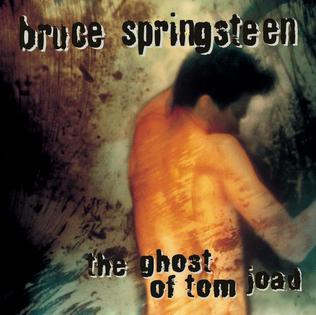
Album Review: The Ghost of Tom Joad


Today marks the 20th anniversary of The Ghost of Tom Joad, Bruce's 11th studio album, and second acoustic album, following 1982's Nebraska.  Coming after the dual release of Human Touch and Lucky Town, this album came out at arguably the nadir of Springsteen's popularity.  While Bruce would later regain his swagger seven years later on The Rising (discussed extensively on this blog), today is a time to look back on 90s Bruce.

The Ghost of Tom Joad is an album that I have listened to very little, and have discussed even less.  In fact, in the process of writing this review, I realized that I was missing a couple tracks.  And after a few listens, I find myself, unfortunately, with very little to say on the album.


The album starts off very strong, with album stand-outs such as the title track, "Straight Time", and "Youngstown".  (It is notable to point out that "The Ghost of Tom Joad" and "Youngstown" would eventually be worked into full-on rock songs, versions that this author prefers).  There is a lot of strong lyrics on this album, too.  For example, the "where there's a...." part in "The Ghost of Tom Joad", while lifted from the book, is particularly strong - so strong, in fact, you can find similar sentiments in future songs such as "The Wrestler" and "We Are Alive".  Bruce's musical work here excels when there is a band accompaniment, as they add diversity and flourish to a rather bleak album.

However, the back half of the album drags, as many songs begin to blend together.  The formula is the same on many songs: Bruce's voice is high in the mix, an acoustic guitar plinks in the background (sounding like a guitar-practice progression), and the songs go on without a strong beginning or ending.  A string of songs like "Balboa Park", "Dry Lightning", and "The New  Timer" just waft over me, and it is difficult for me to find anything that stands out musically.


Ultimately, I don't find this album offering much new to me; the bleak, stark storytelling was explored much better on Nebraska, and Nebraska had a bit more diversity of sound on it, from the Suicide-esque yipping on "State Trooper" to the random rockabilly track "Drive All Night".  Even Devils & Dust, which owes some of it's sound to this album, has a few more memorable tracks than this one.  While there's no offensively bad song on the album (although "My Best Was Never Good Enough" is a bit cheesy), I'd rank it last among the Bruce acoustic trilogy.  

However, having not really discussed this album much, I contacted the other writers on Legends of Springsteen.  Both OB and Steve agreed - The Ghost of Tom Joad was their favorite of Springsteen's acoustic albums!  This came as a shock to me, so let's put it to you, the reader: how would you rank Springsteen's acoustic albums?

Saturday, October 17, 2015

Album Review: The River


Today marks the 35th anniversary of The River.  Sure, 35 years isn't quite the iconic number you want to celebrate (unlike, say, 30 years or 40 years).  However, it seemed as good a time as any to take a dive into this massive double album.

The River is a unique specimen in Springsteen lore.  It was Springsteen's first and only double-album release, which, in itself, was a curious decision.  Furthermore, it produced his first top ten single, "Hungry Heart", which strangely enough was sped up to make it sound less like Springsteen was singing it.  The songs range the entire emotional spectrum: one minute, you are listening to a heart-wrenching tale of the working poor, the next, you are in the barroom listening to drunken catcalls like "Ooh ooh, I got a crush on you!"  There's a lot to digest, which is why you'll hear many Springsteen fans profess to love the album, but very few claiming that it is their all-time favorite.


This epic journey begins with a declaration that "You've been hurt and you're all cried out."  It's an important mission statement for the album, as the music acknowledges you have experienced pain, and you are looking for consolation ("Two Hearts" is a good companion piece to "The Ties That Bind", as it has many similar themes and lyrics).  With The River, the "all over" nature of the songs may be about the process of getting through pain - either through somber reflection ("The River"), humor ("Sherry Darling"), self-affirmation ("I'm a Rocker"), or pure dedication to love ("Drive All Night").

Another theme in The River is that of escape.  Throughout the songs, people have "packed their bags", "went out walking", "gone out for rides and never went back", stolen cars, etc. However, these characters don't find redemption, as they either end up in the same place, or find a whole new set of problems awaiting them.  They are no longer pulling out of here to win - they are pulling out of here because there's nothing better to do.


That being said, let's look at the music.  Upon going to this review, I wasn't sure how these songs were ordered - I'm a product of the iPod shuffle generation.  However, listening to it in order, you won't find many better albums than the first album of The River.  You have the aforementioned "The Ties That Bind" leading the record off, a couple of just pure classic rock songs ("Jackson Cage", "Out In The Street"), and a few songs that show Springsteen's lighter side ("Sherry Darling", "You Can Look (But You Better Not Touch)".  It also contains the sped-up "Hungry Heart" - which, while many fans dismiss in preference of the live version (raises hand), can't be overlooked in its significance, as it helped bring Bruce's popularity to a new level.  The album ends with "The River", one of Springsteen's all-time classic songs (ranking number 8 in a recent fan poll, the highest of any song on the album).  In Bruce's tradition, he ends the album with an emotional gut-punch, as seen before with Born To Run/"Jungleland" and Darkness On The Edge of Town/title track.  From start to finish, The River part one is among the strongest work Springsteen has done.


However, The River part two is much murkier.  Missing are the many of the classic rock hits, as we receive many slow ballads ("Fade Away", "Drive All Night") followed by goofy songs with cocky narrators ("Ramrod", "I'm a Rocker").  While many are enjoyable on their own, it makes for very jarring listening experience, as you can go from getting shot between the eyes to cruising in a Cadillac.  "The Price You Pay" is my personal favorite from this side - while many songs on this side are either dark or light, this achieves a nice balance.  "The Price You Pay" is slow, but not plodding, and the lyrics are emotional, but not maudlin.  And, while I'll always prefer the Tracks version of "Stolen Car", the experimental nature of The River's version of the song has grown on me, and I appreciate Springsteen taking a chance with his music on a major release on this, rather than just going with safe piano ballad.

Overall, I'd give the first half of The River 5/5 stars, while the second half earns a 3/5.  Call it a 4/5 for the whole album, if you must.  So, if you have an hour and a half to kill today, I'd recommend giving this album another spin.  While it may be a little over the place musically, thematically it's one of Springsteen's strongest, and you may find a song that will connect to whatever problems that have been a part of your life.


Sunday, April 26, 2015

Album Review: Devils & Dust


Today marks the ten-year anniversary of the release of Springsteen's 13th studio album Devils & Dust.  Usually, I start these reviews with my persona relationship I had with the album at the time it was released (such as my love of The Rising and my hatred of Working On A Dream).  However, this is an album that never quite left a mark on me in any direction.  I was out of the country when it was released, and subsequently never saw any of the shows on the Devils & Dust Tour.  Basically, before going into this album, I remember just having a generally positive attitude about this album.  And, after a couple of listens recently, that's about all I'm left with: a generally positive attitude.


Devils & Dust is a difficult album to review.  While it generally gets lumped in with other acoustic albums like Nebraska and Ghost of Tom Joad, there are much more instruments than the guitar integrating into these songs (when perhaps they shouldn't be).  In fact, many of these songs were old songs Springsteen had written that were cleaned up and recorded, making the album much more like High Hopes.

There are some good songs, but they never quite reach "great" status.  There are some bad songs, but nothing that can't pass as adequate filler.  It wouldn't be fair to call it "average", but it isn't a classic either.  In fact, I think the album is best summarized by it's title track above.  "Devils & Dust" is a protest strong that has held up fairly well over the years, with its evocative lyrics and stark atmosphere.  However after a strong opening minute, it gets bogged down by overproduction, adding in strings and piano.  It doesn't make the song unlistenable, mind you, but it holds it back from being an all-time Springsteen classic.


While the name Devils & Dust invokes a dark, somber attitude, the best songs on this album are actually Springsteen's love songs.  "Long Time Comin'" is one of the strongest songs on the album, both musically and lyrically.  Invoking the name Rosie again (instantly recalling the classic "Rosalita"), Springsteen weaves a great tale of failed relationships with the hope of working to make the future different from the past.  "Leah" is little love song that has always stuck with me.  While it is very similar to "Long Time Comin'" musically, the "li-li-li's" give it an classic 1960s pop feeling.  "All I'm Thinkin' About" completes this love song trilogy.  Here, Springsteen challenges himself, singing in complete falsetto.  It's a risk that pays off, as it makes the narrator sound breathless, overtaken with his love.


The rest of the songs have one or two things that help them stand out.  You've got "All The Way Home", the random hard rocker on the album that stands out like "Open All Night" on Nebraska.  You've got "Reno", the hooker song.  "Maria's Bed" is a twangy song, with "woos" similar to "State Trooper" and the smiling skull ring from "(Further On) Up The Road".  "Matamoros Banks" is another slow lullaby that ends the album, which seems to be Springsteen's specialty ("My City of Ruins", "Terry's Song", "Dream Baby Dream", etc.).

 The problem is that all of these songs are different thematically.  The album doesn't have the driving direction that helps the other Springsteen work stand out.  You've got anti-war songs, love songs, songs about boxers, songs about cars, etc.  The sound isn't acoustic, but you also don't have the E Street Band, either.  With all that being said, I'd rate the album a three out of five.  It's got a handful of songs that I'd love to see in concert (and a couple I think could be revamped with a full band, such as "Black Cowboys").  Many of the songs have great elements, but they don't quite stick the landing.  Much like this review, which I'm not sure how to end.

Please share your thoughts/stories about Devils & Dust in the comments below!

Saturday, September 20, 2014

Album Review - Nebraska


Today marks the 32nd birthday of Nebraska, one of Springsteen's most unique and unexpected albums.  For those familiar with Springsteen at all, you know this album's reputation.  Among the descriptors for Nebraska I have heard over the years are: dark, depressing, uncompromising, challenging, gritty, original, controversial, etc.  It is what makes this review difficult to write - this album has been dissected and analyzed so much these last three decades that I will inevitably end up using one or more of those cliche descriptions.  So, before getting into the review, allow me to indulge in something personal, since it may be the only original idea I will have going forward.

I have had a bias against this album for quite some time.  It really has nothing to do with its content, but rather all to do with what I just wrote about: it's reputation.  Too often, I have heard the album described the following way: "Even if you don't like Springsteen, you'll love Nebraska."  While you could interpret this as saying that Nebraska is Springsteen's best album, or it has a universal appeal, the context is often positioning this statement as a critique of most of Springsteen's other work.  "Here, listen to Nebraska.  It is actually artistic, not that like those other Springsteen records with their overblown sounds and corny lyrics."  It is insulting, yet it is not unusual to hear Springsteen fans themselves promote Nebraska to their non-Springsteen loving friends in the same manner.  So, based on this mildly pretentious description, I developed a resentment towards the album.  Did I like it?  Of course!  It's Springsteen!  But, I bestowed it with the one word used by many a snarky internet blogger: overrated.

But, admittedly, I was being an idiot.  What someone else says or thinks about an album shouldn't affect my enjoyment of it.  When seeking out new music, the first question should be "What is the music like?", not "Who else is listening to this?"  The concept of something being overrated or underrated is silly and arbitrary to begin with.  So, with the anniversary of the anniversary of the record approaching, I decided to try to clear my mind of all preconceived notions of the album and give it a fresh listen (I did the same with Working On A Dream earlier this year).


Upon my first listen, my thoughts immediately confirmed all the cliches I listed in the first paragraph.  It is certainly not a record where you can just put on and go clean the house.  It is a challenging listen to grasp all of what Springsteen is laying out there.  There are complicated characters, stories told from various viewpoints, and a harmonica motif that runs from the first song to the last.

Naturally, as I digested the album more, I found myself always drawn back to songs such as "Atlantic City", "Johnny 99", and "Reason To Believe", which are songs that were eventually given a full-band makeover in the 21st century.  "Atlantic City" is one of my all-time favorite Springsteen songs, and the nature of the lyrics leads to many variations: it can be a tale of a hero making one last stand against the forces of darkness, or the story of a loser deluding himself into yet another failure.  "Johnny 99" is everything that "Outlaw Pete" wishes it was - a raucous scoundrel story with a catchy riff.  "Reason To Believe" is a perfect note in ending the album, as it is probably the most uplifting song on the album (despite starting with the image of a dead dog).


What keeps bringing me back to the album is the themes, both musically and lyrically, that tie the album together.  For example, "Nebraska" starts and ends with a sad, distant harmonica, which is present in almost nearly every other song, such as "Mansion On The Hill" and "Used Cars".  This  harmonica turns upbeat in the concluding song "Reason To Believe".  Another theme is Springsteen's wailling, on "Johnny 99", we hear a joyous "woo!"  Yet, this turns to screams of anguish in "State Trooper".  The darkness permeating the album can be overwhelming at times.  Dirges such as "Mansion On The Hill" and "My Father's House", both dark lullabies about houses of some sort, are more whispered than sung, and are probably the most difficult to get into. Additionally, "Open All Night" stands out as an unusually track to include, as it is a rockabilly toe-tapper and the only song to use an electric guitar.

After going back, I would consider myself a convert to Nebraska.  It is an impressive experiment by Springsteen that has never been exactly duplicated. (Sidenote: While others may point to The Ghost of Tom Joad and Devils & Dust as attempts to recapture Nebraska, I feel Springsteen's best recent "experiment" has been The Seeger Sessions).  It is not my all-time favorite Springsteen album, but it easily stands among his best work, and I would rate it as a 5 out of 5.

Tuesday, September 16, 2014

Album Review - Dead Man’s Town: A Tribute to Born in the U.S.A.


In connection with the 30th anniversary of Born in the U.S.A., independent record label Lightning Rod Records created Dead Man’s Town: A Tribute to Born in the U.S.A. The album – in which 12 bands cover one of the 12 tracks from Born in the U.S.A. – is a somber, minimalist interpretation designed to cut to the emotional core of the songs, stripping away all pop affectations.

The artists featured include Jason Isbell & Amanda Shire, Low, Trampled by Turtles, and Justin Townes Earle. Each artist puts their own spin on their respective track. Some sound like you’d expect a slower cover to sound, and some sound very different. For example, Holly Williams’ version of “No Surrender” won’t sound that striking to anyone who has heard one of Bruce’s acoustic renditions, but Apache Relay’s eerie take on “Cover Me” feels very foreign indeed (and somewhat reminiscent of an Arcade Fire song). I also really liked Joe Pug’s musical arrangement on “Downbound Train” and it’s always fun for me to hear personal favorite “I’m Goin’ Down” in any variation.

I’m always curious to hear covers of Springsteen songs because they can reveal new sides of the lyrics, reframe the story, reposition the tone, and frankly, they’re just often easier to understand than the originals. As such, I leapt at the chance to listen to Dead Man's Town, especially on the heels of spending so much time with Born in the U.S.A. this summer. I wasn’t familiar with any of the bands featured on the album before listening, and I can’t say I’ll be seeking out any of them further, but they all mesh together very nicely here. It doesn’t feel jarring at all to switch between artists at every track.

The record company has done a nice job creating a cohesive album here – one that’s perfectly suited to accompany moments of contemplative soul searching while staring out a rainy window. I can’t say you'll find any of these tracks on a best Springsteen covers list, but the album certainly captures an overall mood and feel very effectively.

Tuesday, September 2, 2014

Album Review - Voice of America by Little Steven


Several weeks ago, I had finally discovered the hidden gem that was Little Steven's debut album Men Without Women.  It's a tough album to get your hands on, but I was fortunate enough to get in a two-pack from Amazon.com, where it was shipped with Steven's second album, Voice of America.  Since I was pleasantly surprised by Men Without Women, I held back a while from Voice of America as to prevent myself from coming in and being disappointed.  Unfortunately, this strategy didn't work.  Voice of America is quite a departure from Men Without Women, a respectable experiment that didn't quite work.


The changes in musical style are evident right off the bat: the horns are completely gone, and what we have is an album dripping in 80s synthesizers.  The songs, for the most part, aim for loftier political goals, whereas Men Without Women stuck mostly to personal relationships.  Songs such as "Checkpoint Charlie" underscore the problem with on-the-nose political commentary in pop music, in that it dates it to a specific time and place (as opposed to "Devils & Dust", where the metaphors are just ambiguous enough to take on different meanings to listeners throughout the years).  


That being said, there's enough strong rock songs to keep you coming back for more.  The above video is for "Out of the Darkness", perhaps the biggest hit on the album (and with good reason).  It goes back to Little Steven's roots with songs about relationships, but can also work as a political rallying cry.  "Los Desaparecidos" is propelled by a catchy Bon Jovi-esque riff and a strong rebellious story.  "Undefeated" closes the album on a positive note, and sounds like it could be used in an 80s movie montage.


Perhaps the strangest and most intriguing part of this album are Little Steven's experiments into a Reggae sound.  The above song is "I Am A Patriot", another protest song that Jackson Browne has made part of his act.  Little Steven busts out his Reggae voice again in "Solidarity", and the song "Among the Believers" starts with a funky baseline that strong percussion opening that is somewhat reminiscent of "Heaven's Wall".  Your mileage may vary on how much you enjoy these songs, but I appreciated the change of pace from the synthesizers.

Ultimately, the album was a mixed bag.  There were a couple of rockers here and there, but ultimately, the songs did not have enough variety, as the message of rebellion was hammered home in nearly every chorus.  As mentioned several times above, but this album is entirely 80s through and through, only topped by Clarence Clemon's campy debut album in terms of 1980s cheese.  That being said, it wasn't an overall unpleasant listening experience.  If I gave half-stars, this would be a solid 2.5 out of 5.  But, life doesn't give you half stars, so I reluctantly give it 3 out of 5 stars.  Perhaps if you are a die-hard Little Steven fan, or if you in the mood for some 80s arena rock, it would be worth checking out.  But, the casual Bruce fan can skip this one.

Wednesday, July 30, 2014

Album Review - The Rising


On this day in 2002, Springsteen released The Rising, reuniting him with the E Street Band and rejuvenating his career.  It's not just an album I love, but an album that is absolutely ingrained in me.  When I've reviewed past albums, I usually need to listen to the songs a few times to try to form a strong opinion or find new aspects of the song I may have missed before.  However, I did not need to do that with this review, as each song had already carved out a distinctive feeling in me over the last 12 years.  It makes this review both easy and difficult, as I could have written it without even listening to it, but I worry my nostalgia will overwhelm me.  I will do the best I can, and if you end up hating my review, I encourage you to read the much better article written by Steve earlier this year.

Well, let's start with the nuts and bolts.  This album is 72 minutes long, second only the The River in length.  The length, while daunting, is oddly appropriate, as it shows that, after an 18-year hiatus, Bruce and the E Street Band had a lot to get off their chest.  And boy, does this album fly everywhere.


The album starts with a quartet of "welcoming" songs, easing you back into the band's sound.  "Lonesome Day" is a solid rocker that lays out the underlying themes of the album: this is a time of sadness, but also a time of gentle comfort.  "Into the Fire" introduces the more international aspects of the music that infuse many tracks of the album.  "Waitin' On A Sunny Day" lightens the mood a bit, with funny lyrics a simple chord structure.  "Nothing Man" is another slow and humble song, such as "Into the Fire".  The songs are emotionally, catchy, and easy to listen to.


The E Street Band truly returns, however, on "Countin' On A Miracle", blowing the doors off musically.  The tone shifts continue on "Empty Sky", as a kiss is followed by "an eye for an eye", allowing some of the anger bubbling beneath the surface of the record to leak out.  This is then followed by one of Bruce's most experimental song, "World's Apart", which seems to be heavily influenced by the styles in popular music at the time (think of Sting's "Desert Rose").  It would be a signal of the experimenting Bruce would continue to do throughout the next 12 years, notably on Wrecking Ball.

The album dips around this point.  "Let's Be Friends (Skin To Skin)" is another song influenced by current pop culture (Sheryl Crow's "Soak Up The Sun"), and is a fairly weak track.  "Further On (Up The Road)" is a solid rocker, but Bruce ends up capturing this sound and feeling better on the future Magic track "Gypsy Biker".  "The Fuse" is another more "experimental" track like "Into the Fire" and "World's Apart", and doesn't quite stand out.


However, the album goes out with a big bang.  "Mary's Place" is a strong rock song, and it is no surprise that this has become a concert staple.  "Your Missing" is a song I want played at my funeral (and sung by fellow blog contributor OB).  "The Rising", as cliche as it might be say, is the best song on the album, and is easily one of Springsteen's best songs.  Finally, the album concludes with "City of Ruins", a powerful song about overcoming hard times that is just as relevant today as it was 12 years ago.

By the end of the album, you are left bewildered, wondering what just happened.  It is truly a roller coaster ride of rock songs, pop songs, experimental Eastern sounding songs, and funeral dirges.  Emotions go from loneliness, to hope, to joy, back to fear, and then it starts all over again.  It is one of Springsteen's best albums, worth a 5 star rating.  If you haven't listened to it yet, quit wasting your time on this blog and go out and give it a listen!


Friday, July 18, 2014

Album Review - Men Without Women by Little Steven & The Disciples of Soul


After a month dedicated to breaking down one of Springsteen's most famous albums, I needed a bit of a breather.  With that in mind, I went back to the E Street Band, and dug out the debut album from Little Steven & the Disciples of Soul: Men Without Women.  I had some trepidation going into this album: I was disappointed by Clarence's solo album, the promotional music video was incredibly goofy, and, I mean, just look at that cover.  Little Stevie looks like a nerdy kid who just moved to a new school and decided to adopt a "tough guy" personality.  Plus, the title Men Without Women invokes a feeling that this album will be an angered-fuel tirade against women who have done Steven Van Zandt wrong.  In actuality, the title is a Hemingway reference, and the title track talks about how men act foolish without women.  But the "Rory was wrong" theme doesn't end with simply the title.  My doubt going into the album was immediately erased by the first song.


"Lyin' In A Bed Of Fire" is the perfect song to kick off the album.  We are immediately blasted with powerful drums, followed by a catchy guitar riff, and topped off by a blast of the horns section - all within the first 20 seconds.  It's sets the template for what to expect from the rest of the album, as the guitar, horns, and percussion create the signature sound of Little Steven & the Disciples of Soul.  The lyrics tumble out of Little Steven one after another, reminding me of the Boss in his debut album.  The album is full of passionate, catchy, horn-driven rock songs to the point where they do start to blend together a bit.  However, Little Steven has frequently credited R&B and soul musicians from the 60s as big influences in his music, and that shines through in several songs, such as "Until The Good Is Gone".


 "Until The Good Is Gone" mixes both rock and soul, sounding like a mix of Springsteen's "Factory" and the Temptations' "I Wish It Would Rain". With Springsteen's raspy voice backing up Little Steven in the chorus, this song becomes an instant classic that I would love to see live. "I've Been Waiting", the last track on this album, is another attempt at blending the two genres, but is just too close to "Until The Good Is Gone" to really stand out.  


The true gem of this album is "Angel Eyes".  Like "Lyin' In A Bed Of Fire", it is another uptempo rocker, but with catchier riff, a fantastic build right before the chorus, simpler lyrics, and backing vocals from Springsteen.  It is easily the most memorable song on the album, and one that will stick with you from the first listen.

After the first few listens, the tracks do blend together a bit, as there isn't that much range and experimentation.  However, that's to be expected in many albums, especially a debut album.  It all depends on how you digest music.  If you are listening to the whole album, a song like "Save Me" might get lost in the mix; when pulled individually, you can better appreciate its strong lyrics ("As the things we need get closer, I feel the things we want slipping away.").

I'd give it 4 out of 5 stars, and would highly recommend it to all Springsteen fans.  If you are jones-ing for an E Street Band fix, and have been disappointed by the last three albums, go out and give this a listen.  The only difficult part is actually finding this album.  It is not available for a digital download as far as I can see.  I purchased the Men Without Women/Voices of America two-pack (and yes, I plan to review Voices of America some time in the future).  However, if you are really cheap and need this album, please reach out to us via Twitter or GMail and we'll try to help you out.

Friday, May 30, 2014

The Promise of Rock ‘n’ Roll: A Look Back at Born in the U.S.A.


In honor of the 30th anniversary of Born in the U.S.A., Legends of Springsteen will be looking back at this landmark album, dissecting it track by track all month. But first, a few thoughts on the album as a whole.

Marc Dolan’s 2011 Bruce Springsteen biography boasts the fantastic title “Bruce Springsteen and the Promise of Rock ‘n’ Roll”. I must confess that I haven’t actually read the book, but I’ve admired the title ever since I heard it. To me, the album Born in the U.S.A. exemplifies what the promise of rock ‘n’ roll truly means: the power to connect billions of people through music, and in doing so, create something that can question society, inspire with words of hope, and rock out like no one is watching.

Critics would likely point to Born to Run and Darkness on the Edge of Town as the superior albums artistically, but Born in the U.S.A. operates in the upper echelon of commercial success, unrivaled by any of Springsteen’s other work. The album’s popularity (it’s one of the biggest albums in the entire history of music) makes it hard not to consider this his most important work. After all, this is the album that cemented his legacy as a music icon, ensured that his past albums would be revisited and paved the way for 30 years of more music. It also gave eternal fodder to the smaller group of naysayers who might dismiss his songs as “roller rink music.”

Listening to the album 30 years later, even a diehard Springsteen fan can see both sides of the coin: why it was popular, and why it might come to be derided. As someone who favors the former side, the one complaint that I would concede to is that the music and lyrics don’t always mesh together. On most occasions, the music is far more upbeat and buoyant than the gritty, sobering lyrics. I think it’s fair to cite a tonal dissonance on tracks like “Born in the U.S.A.”, “Dancing in the Dark” and, perhaps most flagrantly, “I’m Goin’ Down”. Is this representative of an artist who can’t fully calculate his feelings? Or an artist who isn’t talented enough to reconcile both sides of the song writing process?

On the other hand, doesn’t this album represent the pinnacle of what pop music can achieve? A blend of art and commerce. Yes, the songs disguise jagged commentary in top 40 friendly sounds. But isn’t that a good thing? Infiltrating the populous to tell stories about the spoils of war or the folly of lingering on one’s youth, isn’t that the definition of pop music in its most excellent form? Born in the U.S.A. is equal parts confectionary and commentary. Like The Beatles’ Sgt. Pepper’s Lonely Hearts Club Band, The Smashing Pumpkins’ Mellon Collie and the Infinite Sadness, and Kanye West’s Yeezus, Born in the U.S.A. feels equally at home at the top of the charts as it does in a scholarly journal.

The fact that Born in the U.S.A. is perceived as Springsteen’s most pop-friendly album is an amazing feat in itself when you consider the dense, lyric-heavy songs like “Working on the Highway” and “Darlington County”, the sobering recollections of “My Hometown” or – famously – the political outrage of “Born in the U.S.A.”

Despite Bruce’s best efforts to make sure the album’s titular song didn’t define him, “Born in the U.S.A.” still packs a wallop. Listening to the song afresh in the context of the album, from the second you hear the fury of Max Weinberg’s drums, you realize that time hasn’t dulled its immediacy and that this banner track retains its indelible, raw power.

Bruce has seemed more comfortable extending the popularity of “Dancing in the Dark” by turning it into an encore staple, but it’s received its fair amount of derision as well. Often the song is dismissed as too poppy, but for my money it has some of the best lyrics Springsteen has ever written, delivered in a vehicle for mass consumption.

The fact that the songs on this album have been so misunderstood and misappropriated seems at least partly by design when you contrast the album version of “Born in the U.S.A.” with the Nebraska version eventually released on Tracks. You can’t blame the American public for missing the mark on some of these tracks. I concede that it took me years – if not decades – to fully grasp some of these tracks. Like all good art, there’s room for misinterpretation here. But the album is not just an effort in theoretical inquiry. It’s also a hard rocking album ripe for blasting at full volume. Born in the U.S.A. may have been made for mass consumption, but it wasn’t made for the lowest common denominator.

Friday, May 2, 2014

Album Review - Hero by Clarence Clemons


When this blog first began, I considered myself a very passionate and knowledgeable Springsteen fan.  However, over two years later, I have absorbed a disturbing amount of Bruce information, including two biographies, two comic books, and countless strange Youtube videos.  Recently, after seeing the E Street Band get inducted into the Rock and Roll Hall of Fame, I figured it was time to step up my game and learn more about the backing band that created Springsteen's signature sound.  Having been amused by Clarence's 80s-tastic video for "You're a Friend of Mine", I decided to dive into the album that spawned it: Hero.

Based solely on the timing of the album's release (November 1985), this album could be easily categorized as a shameless cash grab at the apex of Springsteen-mania.  Unfortunately, there's nothing on this album that disproves this hypothesis.  The sound here is classic 1980s, as you can hear bits and pieces from the decade's iconic bands throughout the album, such as Duran Duran ("Temptation"), Prince ("Kissin On U"), Journey ("Christina"), and Hall & Oates ("You're a Friend of Mine").  You could easily imagine many of these songs being played during a montage in Beverly Hills Cop or Rocky IV.  The lyrics here are very simplistic and literal, lending credence to the thought that this album was hastily put together post-Born In The USA.  However, what helps make this manageable is that Clarence is self-aware of the nature of the project, often referring to himself as his "Big Man" persona, describing himself with Boss-esque cartoonish hyperbole.

There isn't too much to say about this album.  There are some lyrics and music choices that have aged like milk, but let's be honest: Clarence was not aiming to make Born To Run here.  Hero was made for a specific moment in time and for a very niche audience (people who loved Bruce Springsteen and wondered what it would sound like if the saxophonist sang).  That being said, there are a few songs that were worth noting, such as his surprisingly effective love ballads like "Cross the Line" and "Christina".  Other tracks are fairly strong musically, but are dragged down by surface-deep lyrics.  I feel that if Bruce had a once over look "It's Alright With Me Girl", he could have come up with something stronger than: "It's alright with me girl, if you tell me the truth.  It's alright with me girl, do what your heart tells you to."  However, my main complaints with this album mirror my complaints about Clarence's biography: while it is funny and light-hearted, it ultimately feels phoned in and unsatisfying.  I'd rate this a 2 out of 5 stars: if you are an E Street die-hard, feel free to check it out if you are curious, but it is not essential listening.

Tuesday, April 22, 2014

How Do I Begin Again? – An album review of The Rising


“How do I begin again?”
– My City of Ruins

The above question defines The Rising. And its query is two-fold. On the one hand, The Rising is explicitly a response to 9/11. On the other, it marks a new stage in Bruce Springsteen's career. What seemed like the beginning of his third act, has since become an extension of the second act in a career even more prolific than anyone would have imagined back when Born in the U.S.A. cemented him as a cultural icon.

Prior to the release of The Rising, Bruce had managed to shake off his 1990s "Who am I" malaise with the release of The Ghost of Tom Joad – an album which won him critical, but not commercial, acclaim. Having reaffirmed his artistic credibility, Bruce then won back the masses by resurrecting The E Street Band for a series of nostalgic concerts. But the true test would be producing an original album with The E Street Band, their first in 18 years. Everything was on the line with The Rising. Would Bruce reassert his relevance? Or would he fade away?

Fortunately, the album was a massive success, debuting at number one on the Billboard 200 chart, drawing rave reviews, and bringing home three Grammys.

I’ve mentioned before that The Rising is my favorite Springsteen album – and by extension, my favorite album of all time. It holds a special place in my heart, and trying to look back at the album without the patina of nostalgia is futile. As such, the following review leaves out much of the praise and ardent emotion I feel for the album. I attempted to look at it more analytically, and tried to wrestle with its themes and structure. I’m not sure how successful I was, but I tried to tackle each song both on its own and as a piece of a larger work. It was a stirring experience, and the album holds as my favorite.

Like any work of art, it’s not without its weaknesses. I find the track order a bit odd at times, and I think it could have benefitted from some restructuring. For example, “Waitin' on a Sunny Day” and “Countin' on a Miracle” feel like variations on a theme. Yet they are separated by a single track, “Nothing Man”. I think this pair of songs would have benefited from either having greater distance on the album, or appearing back-to-back as if to illustrate a progression from passive to active.

After you've been to a live show, it’s nearly impossible to distance the album version of “Waitin' on a Sunny Day” from the sing-along spectacle it has become in concert. Which is too bad because it’s still a good song in its own right!
While “Waitin' on a Sunny Day” has taken on a more lightweight feel over the years, “Mary's Place” has taken on increased poignancy for me. When the album came out I originally tended to dismiss “Mary’s Place” as rather simple. But in the twelve years in between, its complexities have revealed themselves to me as the quiet pain of someone in grief trying to emerge from depression and daring to live again. While many of the songs feel immediate and focused on the here and now of 2001, songs like “Mary’s Place” round out the album's meditation on 9/11 by considering its lasting effects further on in time. It’s the song that brings me closest to tears (“Tell me how do you live broken hearted?”). It can make for an emotional wallop, as it’s followed by the album's more traditional tearjerker, “You're Missing" ("I got too much room in my bed").

Meanwhile, “Worlds Apart” and “Let’s Be Friends (Skin to Skin)” come off as a pair of good intentioned, albeit simple, odes to racial equality and acceptance. The minimalist “Paradise” would seem unremarkable, unless consumed as the natural ending of the album’s larger narrative. Within this context, “My City of Ruins” appears as a bonus track – a fantastic, malleable song that has adopted multiple identities over the years, serving as a beacon of hope for Asbury Park, 9/11, and Hurricane Sandy, respectively.

In many ways, The Rising is one of Bruce's least angry albums, which catches you off guard given the subject matter. There may be some pent up rage in “The Fuse” and “Empty Sky”, but by and large this is an album of solemn reflection. Which is something I really admire: Bruce's discretion and tact. He invokes 9/11 through direct imagery in “Empty Sky” and “Into the Fire”, but there aren't any songs about planes or Al Qaeda.

All that and I haven’t even talked about the album’s title track, or my favorite song on the album, “Lonesome Day”. My experience with both songs was initially formed by their music videos that made the rounds frequently on TV. “The Rising” grabbed my attention with the electric MTV Video Music Awards live performance that served as its music video, but it was “Lonesome Day” with Bruce soul searching on the Jersey Shore that got me off the couch and into the record store. It’s hard for me to listen to either song without instantly descending into the hard rocking head nodding and emotional lip synching that I engaged in as a 17-year-old. What can I say, I love everything about both of these songs.

If it hadn't been for The Rising, there would be no LegendsofSpringsteen.com. If the album had fizzled, Bruce would not have enjoyed the renaissance he's currently experiencing and he would not have ushered in a new generation of Springsteen fans to the degree that he has. Even if The Rising isn’t your favorite album, it served as the gateway for a large number of the millennial generation into a profound relationship with The Boss.

Tell me, how do we get this thing started?

Monday, January 27, 2014

Album Review - Working on a Dream


At times, the Internet can be a very negative place.  Like Louie CK said, people will just spout off mean comments to a monitor screen and feel no remorse as they do not see the anguish they cause.  Furthermore, if you cause a stir on the Internet, you'll garner more of those coveted pageviews, so people are incentivized  to generate controversy, and being a Negative Nancy is a fairly easy way to ruffle people's feathers.  I've been very proud of the work at Legends Of Springsteen over the last two years, as we have maintained a positive attitude (well, not always) while being completely honest in our thoughts and opinions about Springsteen.  With that being said, I hesitated before taking on the task of reviewing Working on a Dream.

Five years ago today, Working on a Dream, Springsteen's 16th studio album, was released.  There was a massive promotional campaign behind it, and, given its timing, it could have been called Obama's Inauguration: The Soundtrack.  In order to sell the album, they pulled out all the stops, from Springsteen's fantastic Super Bowl performance, the inclusion of a Golden Globe winning song, and a sprawling tour featuring an epic five-night stand to close out Giants Stadium.  And, it was five years ago today, that I began my hatred for this album.

My initial impressions of the album were: this is too nice.  Springsteen's too happy.  Gone was the angst, frustration, and sadness that made Magic one of my favorite albums just a year-and-a-half earlier.  Every other song seemed to be about how fantastic everything was: his day was lucky, he fell in love at the supermarket, and he was throwing someone a surprise birthday party!  I immediately dismissed it as the worst Springsteen album ever, and, aside from "The Wrestler", I never found myself playing any of the songs again.

But, as Mark McGwire said, I'm not here to talk about the past.  With the five year anniversary coming up, I decided to dust off the old section of my computer where Working on a Dream lies and give it another double-click.  I tried to keep as open of a mind as possible, and the results surprised me:

I liked a few songs.

"What Love Can Do" is a Goo Goo Dolls-esque rocker, which, for those who know me, is actually a compliment.  It's simple, catchy, and, most importantly, short.  Many times on the album, the songs have a good idea, but they last too long and the song becomes boring, such as "My Lucky Day", "This Life", and "Outlaw Pete" (which I thought reached its conclusion three times before it actually did).  "What Love Can Do" is a song I didn't even remember before going into this review, so I had no preconceived notions to battle against.  There were, however, two songs I did a complete reversal on: "Working on a Dream" and "Kingdom of Days".

I was actually shocked by how much I enjoyed "Working on a Dream" when re-listening to the album.  It is very sweet and gentle, and I can easily see how it was adapted into a lullaby.  Bruce's voice also sounds incredible in this song, as he sings softly, without the growling and shouting that are trademarks of every Springsteen impressionist.  As for "Kingdom of Days", I recall debating this fellow writer Steve at the time, where I got too hung up on the lack of subtlety in the "I love yous".  However, the song has some fantastic lyrics, making it a strong choice for a wedding like "Happy" and "If I Should Fall Behind" (in fact, far-to-infrequent contributor James did have this song played at his wedding).

Unfortunately, these three songs were all the positivity I could take.  My initial thoughts of the album were that it was too "happy", and, five years later, this remains unchanged.  Following "Outlaw Pete", we are treated to five songs, about 20 minutes, of Bruce loving the world.  Don't get me wrong, I'm not a dour man, but after wave after wave of good-feelings, the dark tones of "Good Eye" were a welcome respite, even though it has an annoying distorted vocal.  And, shortly after that, it's back to the good moods with the honey-dripped "Tomorrow Never Knows".  The overt sweetness and lack of variety makes this a tough album to get through.

Additionally, this album features some songs that are so bad, they elicit laughter.  "Outlaw Pete" has some good ideas, but those ideas were already covered in KISS's "I Was Made For Loving You".  Aside from that, it is eight-and-a-half minutes dedicated to man who's introduced as a Coen-brothers-esque baby bandit.  "Queen of the Supermarket" reminds me of the classic Dana Carvey skit where he's making up a song on the spot.  "Surprise Surprise" seems like one of those songs characters would sing in a television show when they couldn't pay for the rights to sing the "Happy Birthday" song.

Overall, it was a very up-and-down experience to go back and listen to this album five years later.  For every song that got me thinking "Hey, this isn't too bad", there was another that was even worse than I remembered it.  It may not be Bruce's worst album of all time, but I still can't fully endorse it.  I would give it two dreams out of five.  That being said, if you'd like to order the album, click on the Amazon banner below!


Tuesday, January 21, 2014

Quick Takes: High Hopes (OB)


So after listening to High Hopes for a full week I find myself fairly underwhelmed by the album, but still listening to it.  Like most people who have reviewed the album, I'm fairly split on my opinions of it.  What's good, ("Just Like Fire Would" and "Hunter of Invisible Game") is great.  Some of Bruce's best stuff since Magic.  But what's bad ("41 Shots" and "Harry's Place") is pretty abysmal.

Before I break it down, track by track, a little bit on the background of this album.  This has to be the least hyped Bruce album of recent memory.  I saw very little press coverage to promote this album.  Most of my friend's didn't even know Bruce released a new album until his fantastic appearance on Late Night With Jimmy Fallon.  Granted, they aren't Bruce fanatics like Rory, Steve and myself but they are casual fans nonetheless.  Hell, even I had to keep reminding myself in the weeks leading up to the release that Bruce had a new album coming out.  Fortunately, due to a fanatical fanbase and his great appearance on Fallon, it seems Bruce is about to score his 11th Number 1 album in the United States.  He's already Number 1 in the UK, and a number of other European countries.

And now, the tracks...

1.  "High Hopes"-  Not a fan of this at all.  I loved both lead singles from Working On A Dream and Wrecking Ball ("My Lucky Day" and "We Take Care Of Our Own", respectively).  In the end, I found the albums did not live up to the excitement I had for the album.  So now I've got a lackluster lead single, on an album that has minimal promotion...not the best start to an album.  Rating:1.5/5

2.  "Harry's Place"-  Complete and utter crap.  This might top "57 Channels" as my least favorite song ever released.  Like Steve said in his review, the song is a completely out of left field and very much in the style of Dire Straights.  So kudos to Bruce for experimenting, and trying something new.  Now, never do a song like this again.  The only plus of this song, is the posthumous work of Clarence Clemmons.  Rating: 0.5/5... and it's not even the worst song on the album...

3.  "41 Shots (American Skin)"-  This song has been written about numerous times on this blog so I won't get into the background of this song, and I'll just review it.  The song is one of Bruce's most controversial, but to me the live release from Live In New York City, is one of Bruce's most powerful performance.  Unfortunately all of that emotion is lost on this studio version.  I really liked when  "American Land" and "Land of Hope and Dreams" got studio treatment on Wrecking Ball and they were welcome additions to the Springsteen Library.  This version is not.  It's overproduced and loses all the emotion of the Live In New York City version.  It's the worst song on the album, and if it weren't for the iconic live album version, this would go down as Bruce's worst work, in my opinion.  Rating: 0/5

This is not a good start to the album...

4.  "Just Like Fire Would"-  Just when I was ready to call this Bruce's worst album ever, "Just Like Fire Would" saved it.  Not only saved it but completely revived it.  A cover of a song I've never heard, by a group I've never heard of, and it's one of Bruce's top 5 songs of recent memory.  This song will bring the house down, and in my opinion, get the "Waiting On A Sunny Day" and "Shackled And Drawn" treatment in the set list for the upcoming live shows to really get the crowd going and into the show.  Rating: 5/5.  This song alone, saved this album.

5.  "Down In The Hole"-  I don't hate this song, but I hate where it's placed on the album.  After getting all pumped up from "Just Like Fire Would", this really brings me down.  It's a good song, reminds me a lot of "World's Apart" from The Rising, but it just should be somewhere else on the album.  It's far from perfect though, and is another song that suffers from overproduction.  Rating: 2.5/5.

6.  "Heaven's Wall"- Rocky Ground 2.0.  That's the best description of this song that I can come up with.  It's got a very gospel, spiritual feeling to the song.  Also it's an average song, that was really improved upon when performed live on Fallon.  This song will be a staple of the set list on the upcoming live shows, and probably even get a primo spot in the encore.  Rating 3/5.

7.  "Frankie Fell In Love"-  If another artist wrote this song it would sound like a novelty song.  But this short, up tempo rocker, with some of the sweetest, most over the top (in a good way) lyrics is a fantastic song.  Bruce falls back on a trademark of giving a gender-confusing-name to the main character of the song, but then tries something new with including historical figures in a fictional manner in this song.  In this case it's Shakespeare and Einstein discussing the practicality of the beloved Frankie finding the man of her dreams.  Frankie Fell In Love, and so will you...with this song.  Rating 4/5.

8.  "This Is Your Sword"-  With a very Celtic-like sounding intro, I can't help but think Bruce's work with The Dropkick Murphy's rubbed off on him in this song.  Another solid song on this album, with a great sound and lyrics.  It's missing a slight something that I can't put my finger on.  That keeps it from being an elite song but it's still a very good song.  Rating 3.5/5.

9.  "Hunter Of Invisible Game"-  As much as I praised "Just Like Fire Would", with each listen of this track I start to rethink that maybe this is the best song on the album.  I don't know, but both are great and completely different.  I cannot wait to be singing along with Bruce on this somber, acoustic ballad in the (hopefully) upcoming US tour.  Also, this is some of the finest lyrics Bruce has ever written on a metaphoric level.  "Hunter of Invisible Game" should be a regular used term in the English vernacular.  Rating: 5/5.

GREAT run of songs...

10.  "The Ghost Of Tom Joad"-  Like "41 Shots", I'm just going to assume you know the history of this song.  In a nutshell, Bruce wrote it in 1996, released it, Rage Against The Machine covered it, and Bruce has been playing it with Tom Morello on a regular basis since.  The original acoustic is very good, Rage's cover stinks, but Bruce playing it with Tom Morello, takes the original and turns it up to 11 to create pure magic.  It's not like live versions of "Atlantic City" or "Youngstown" where the song gets changed. "Ghost Of Tom Joad" is still the same song basically, but just so much more powerful with Morello, when performed live.  Unfortunately, it loses a lot of that power in the studio.  Not nearly as much as "41 Shots", but it's just not the same.  Rating: 2.5/5.

11.  "The Wall"-  This song is just really forgettable, in my opinion.  Sounds like a song left off of Devils and Dust which wasn't that great of an album to start with.  I am not going to lie, I end up skipping this song most times.  Not out of hatred like other songs, but just boredom.  Rating 1/5.

12. "Dream Baby Dream"-  This one hurts.  There was a time I said this was Bruce's best cover.  I've since changed my mind and given that title to "Long Black Veil".  But still "Dream Baby Dream" is a close second.  The live version, from the Devils and Dust Tour that is.  Unfortunately, like all the other studio version's of live songs on this album, it just doesn't stand up.  The live version has this beautiful desperation of Bruce sitting at the organ and repeating the same lyrics over and over again.  It reminds me a lot of the ending to the Johnny Cash biopic, Walk The Line, when he continually proposes to June Carter till she finally sees he's for real, and accepts.  And, criminally, that is just missing from this studio version.  It's not nearly as noticeable as the other two live songs getting studio treatment, but it's still lacking.  Rating: 3/5.

Overall:  I know I've used this joke before on the blog, but I can't remember when so I will use it again:  Sex is like pizza.  When it's good, it's great.  When it's bad...it's still pretty damn good!  And that's how I feel about Springsteen.  I will never complain about a new Springsteen album, especially because they are almost always followed by tours.  And like I said, what's good on this album is great!  The best thing about the digital age of media is the reduction of price in buying new albums.  10 years ago, when physical media was dominant and this CD would probably cost $20, I don't know if I could recommend it.  But in today's of iTunes and Amazon downloads, I can wholeheartedly recommend it for nearly half the price!

Friday, January 17, 2014

Quick Takes: High Hopes (Rory)


Usually with movies, I try to stay away from reading reviews, so as to avoid possible spoilers and not have my expectations of the film tainted.  However, I didn't follow the same rules regarding High Hopes, as I pored over the Internet to get the critics' takes on the new album.  The reviews were very middling, as Pitchfork gave it a 4 out of 10, and the AV Club gave it a C+.  While Steve's first impressions were generally positive, I was still very wary of the record when going into it.  Surely, it wouldn't be as disappointing as Working On A Dream, but I wasn't expecting anything as strong as Magic.  And, as predicted, that's just where it landed.  It's....okay.

Granted, I've only just begun to digest the album, and my opinion is subject to change over the next few weeks, months, and even years.  But, from my first impressions, High Hopes seems like almost any other album released by aging rock stars - my mind immediately went to Tom Petty's solid-yet-forgettable albums The Last DJ and Highway Companion.  There's a couple of solid songs in here that will be added to a few On-The-Go playlists, such as "Frankie Fell In Love" and "Just Like Fire Would".  My personal favorite so far is "Dream Baby Dream", a simple, slow-building song that reminds me of Girls' "Hellhole Ratrace", where the lyrics become more and more powerful with every repetition.

Unfortunately, I agree with much of Pitchfork's review, as they complain about the over-reliance on studio sounds that sound dated, such as the distorted "Radio Bruce" voice.  Their review is especially on point in their analysis of "American Skin", which is by far the album's biggest misstep.   The live version has become so ingrained in the hearts of Springsteen fans that a studio version was nearly unnecessary.  You lose many of the tiny details that made the live version special, from Bruce's plea for quiet from the crowd to the exhausted sigh about 5 minutes in, right before belting out the line "My boot's caked in this mud."  Like Cheap Trick's "I Want You To Want Me", I'll be sticking with the live version for the foreseeable future.

What ultimately drags the album down is the lack of message.  Nearly every album since the turn of the century has had a unifying theme linking each song.  This, however, just feels cobbled together.  That being said - it is another 56 minutes of new(ish) Bruce music, which is a great way to start any year.  I look forward to hearing what you guys think, and changing my opinion about 50 times this weekend.

Tuesday, January 14, 2014

Quick Takes: High Hopes (Steve)


It’s fitting that the album cover of High Hopes features two images of Bruce Springsteen. His 18th studio album feels like an auditory journey through the uncanny. At once, this album is unlike any of his other albums and also unmistakably the work of Bruce Springsteen. The Los Angeles Times recently described Woody Allen’s Blue Jasmine as “both different and the same.” That’s an apt description for High Hopes.

The opening minute of “Harry’s Place” is the type that makes you sit bolt upright in surprise and yet “High Hopes” – a song that he didn’t even write – seems like the kind of song he could have composed in his sleep.

A collection of covers, cuts, and remakes, the album is a curio in Springsteen’s oeuvre. I doubt that it will ever be treasured by anyone as one of his best. And I wouldn’t argue with the detractors who feel that the album is overproduced, but I would say that there are a couple of gems here and a lot of fun to be had.

When you look at an album like this – or a song like “Rocky Ground” – some might regard it as a desperate attempt by Bruce to connect with an audience that doesn’t care about him anymore. But I see it as the work of a tireless creative who isn’t afraid to experiment at a point in his career when he could so easily sit back and rest on his laurels.

I look forward to digesting the album further over the coming weeks but in the meantime, here are a few thoughts track-by-track…

“High Hopes” – I really enjoy listening to the song, but will it have any pop culture relevance?

“Harry’s Place” – The unexpected, Dire Straights-esque sound reminds me of the shock of hearing “Ain’t Got You” for the first time. It’s also notable for adding another two f-bombs to the Springsteen catalogue.

“41 Shots” – I was completely caught off guard when this song began. I greatly prefer the live version, not just for nostalgic reasons but also for its raw power. On this studio version, the emotion feels too removed.

“Just Like Fire Would” – So far, this is my favorite song on the album. I loved his live version and love this, even though it’s weird to hear a song go from live to studio rather than vice versa. Is the studio version overproduced? Probably. But I really like it. It may be a guilty pleasure but it’s great for toe tapping and air guitar in the privacy of your own home.

“Down in the Hole” – A great, quiet song. It strikes me as the best song on the album, but I need to listen to it more to be certain.

“Heaven’s Wall” – I find it very catchy and one of the clearest examples of a song that sounds so different and yet so similar to his past songs.

“Frankie Fell in Love” – One of Bruce’s shortest songs, it sounds old fashioned and reminiscent of The Everly Brothers.

“This is Your Sword” – I find this to be the least remarkable song on the album. Each time I’ve listened to the album, I have no recollection of this song by the end.

“Hunter of Invisible Game” – I’ve been singing the chorus in my head a lot the past few days and I really like the melody. It might become a favorite over time.

“Ghost of Tom Joad” – The one true “remake” on the album. Have any other artists ever remade their own song to this degree before? It’s the smoothest of the live-to-studio transitions in my opinion.

“The Wall” – Along with “Down in the Hole”, this is quiet and understated, but undoubtedly significant.

“Dream Baby Dream” – I’m undecided on this song. I feel like I should love it but it hasn’t caught on with me yet.

Wednesday, September 25, 2013

Album Review - Magic


Six years ago today, Bruce Springsteen released his fifteenth studio album, Magic.  It was his first album with the E Street Band since The Rising, which was more or less the gateway album into my fandom (as it was for many younger Springsteen fans).  With that in mind, Magic had a lot to live up to - the last two albums, while they have grown on me in retrospect, were not the classic Springsteen sound that hooked me.

A month before the full album dropped, the first single "Radio Nowhere" was released.  While it was not a particularly groundbreaking or deep song (as many critics noted, it shared much in common with Tommy Tutone), it was a wake-up call that the Boss was back, and making sure we were all ready to join him.  When the album was finally released, I was immediately hooked.  After maybe a day (or an hour) of trying to be skeptical or nit-picky about the album, I just knew that Springsteen had released another classic album.  Like The Rising, the tracks were at once catchy rock tunes and very political.  Whereas The Rising spoke to the strength of America post-9/11, Magic spoke towards the mistakes we've made as a country, believing the lies of our leaders, and how it is our job to both acknowledge and solve the problems we've created.  It encapsulated a dark-yet-hopeful feeling, as opposed to Wrecking Ball's dark-and-angry feeling.  I saw two shows during the Magic tour, and I loved Springsteen's preambles introducing the new songs, such as "Livin' In The Future":


However, I really haven't given the album much of a listen in several years, and many songs from it were noticeably absent in the Working on a Dream and Wrecking Ball tours.  So, in the interests of the current blog post you are reading, I decided to re-immerse myself in Magic, hoping it didn't lose any of its...um...charm.  Instead of keeping you in suspense, I'll let you know up front: it is still amazing.

What is really outstanding about the album is it is just chock full of songs that, had they been released earlier in Springsteen's career, would be iconic hits for the boss.  The zenith of the album is "Livin' In The Future", which brings back the classic E Street sound from the Greetings from Asbury Park days.  In the track, the band is fast and free-wheeling, perhaps being influenced by the Seeger Sessions.  The lyrics are Springsteen turned up to his "Madman drummer bomber" level of zaniness, as we are treated to monkeys on leashes and barrel-piston-esque boot heels.

On a side note: Regarding the lyrics, each election year, fellow Legends of Springsteen writer Steve and I have a tradition based on "Livin' In The Future".  On the first Tuesday in November, Steve will update his Facebook status with "Woke up election day.  Sky's gunpowder and shades of grey."  I, dutifully, update mine with "Beneath the dirty sun, I whistle my time away."  While Steve's update generally receives little notice, mine usually sends a message that I'm being lazy, and have often received messages reminding me to get out there and vote (my general cynicism about politics also plays a roll in this perception).  Now, you may be wondering what this has to do with the album Magic, and you'd be right.  Moving on....


"Girls In Their Summer Clothes" was the album's biggest hit, as it encapsulated a unique and specific summer feeling that is rarely touched upon - the summer song of the aging.  Trust me, when I go to the Jersey shore and start seeing how much younger everyone than me is, you can be certain that I always grimly shake my head, put my headphones on, dial up "Girls In Their Summer Clothes", and slowly walk away.  I really do watch too many movies.

But the albums hits don't stop there.  "I'll Work For Your Love" also sounds like an early Springsteen track, as the haunting piano and religious imagery were Springsteen's modus operandi in the Born to Run era.  "Long Walk Home" is an amazing companion piece to "My Hometown" - you could easily see one segueing into another during a concert.  Even when Springsteen goes slower and sadder on this album, he absolutely nails it, making "Terry's Song", a tribute to Terry Magovern, a touching tribute that I'll write into my will to be played at my funeral.

And that just concludes what I consider to be the A-list songs, but there are several songs that are solid additions to the Springsteen catalog, such as the aforementioned "Radio Nowhere", "Gypsy Rider" (this is a near classic, as the opening is amazing, but I just wish it was more subdued throughout the whole song), and "Last To Die" (could have easily switched places with "Radio Nowhere" as the leading single, but the lyrics may have been too political).  If I had to list any criticisms, it would be that sometimes Bruce's voice is over-manipulated (as in "You'll Be Comin' Down Now"), making him sound flatter and removing the "raw" quality from his voice.  Also, the title track leaves me flat, as it is too dark for my tastes, yet the tune of the song is not that bad (it could easily be re-appropriated into a love song), and it is the shortest song on the track.

As I mentioned before, this album is an instant classic, and I'd easily rank it among Springsteen's ten best, if not in the top five.  It is a shame that we don't hear Springsteen play more tracks from this album in concert, as not hearing it live could make fans reluctant to continue to listen to it.  So, if you have overlooked this album recently (as I had before this article), do yourself a favor and give it another spin - you won't be disappointed.